April 12, 2026 • Marlowe Finch • 10 min reading time • Prices verified June 4, 2026
Cover It or Lose It: Grill Covers That Actually Protect a Portable Between Cooks
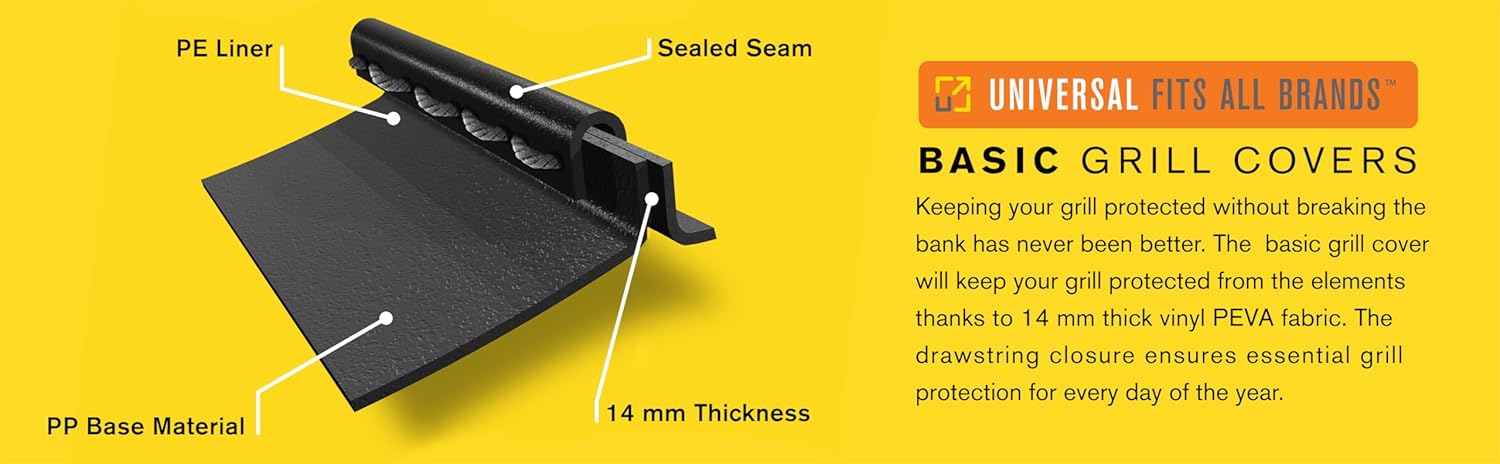
A grill cover is exactly what it sounds like — a fitted sleeve, usually made from coated fabric or heavy polyester, that goes over your grill when you’re done cooking and keeps the weather, UV rays, and general garage chaos from slowly destroying it. For a full-size backyard grill bolted to a patio, a cover is a nice-to-have. For a portable grill — the kind you haul to campsites, tailgates, balconies, or the back of a van — a cover is something different: it’s the difference between a grill that lasts five seasons and one that starts flaking, rusting, and misfiring after eighteen months. Portable grills live harder lives than their stationary cousins. They rattle in truck beds, sit in salt air, get stacked under gear, and spend winters in conditions no manufacturer warranty fully accounts for. This guide breaks down what to look for in a cover built for a portable, where cheap covers actually fail, and how to pick the right one for your grill, your climate, and your storage reality — without spending more on the cover than the grill deserves.
| EDITOR'S PICK[Masterbuilt® Electric Portable](https://www.amazon.com/dp/B09JDFCLMT?tag=greenflower20-20)… | Mid-tier[SunPatio 2 Burner Gas Grill Cov](https://www.amazon.com/dp/B0759VLWNT?tag=greenflower20-20)… | Budget pick[Char-Broil 2 Burner Medium Basi](https://www.amazon.com/dp/B0759VLWNT?tag=greenflower20-20)… | |
|---|---|---|---|
| Material | PVC Liner | Heavy Duty Waterproof | — |
| Stitching | Double-Stitched | — | — |
| Side Tables | — | Collapsed | — |
| Water Resistant | ✓ | ✓ | — |
| Price | $29.99 | $24.99 | $9.50 |
| See on Amazon → | See on Amazon → | See on Amazon → |
Why Portable Grills Need Different Cover Logic Than Full-Size Units
Here’s the thing most product listings skip: a cover engineered for a Weber Genesis (a full-size freestanding propane grill weighing 130+ pounds) shares almost nothing in common with what a Weber Traveler or a Camp Chef Everest actually needs. The threats are different, and so is the geometry.
The exposure profile is harsher. Full-size grills typically live on a covered deck or under an overhang. Portable grills get transported in open truck beds, bungee-corded to roof racks, stored in damp garages, and sometimes left on balconies with no windbreak. Consumer Reports’ grill buying and maintenance guidance notes that UV degradation and moisture infiltration are the two leading causes of premature burner and grate failure — and both threats are dramatically amplified when a grill moves around frequently and can’t be stored in a controlled spot.
The fit tolerance is tighter. A cover that bags out two inches on a 60-inch grill is barely noticeable. The same slack on a 14-inch tabletop grill creates flutter, which turns into abrasion damage against the lid, which eventually chips the enamel or anodized finish that was protecting the metal underneath. AmazingRibs.com’s storage guide emphasizes that a loose cover in wind can cause more surface damage than no cover at all — the fabric acts like sandpaper against powder-coated surfaces when it flaps repeatedly.
The folded-dimensions problem. Many portable grill covers are designed for the grill in its open, ready-to-cook configuration. But portable grills fold. Your Camp Chef Everest collapses to roughly 14 × 11 × 5 inches. Your Weber Traveler folds to about 24 × 23 × 13 inches. If your cover is sized for the open position, it’s a pillowcase in the closed position — useless for transport and actively trapping condensation when stored folded.
Before you buy any cover, establish two measurements: the grill’s deployed dimensions (open, legs extended, ready to cook) and its transport dimensions (folded or collapsed for storage). The best covers are designed for one of these configurations specifically, and the product listing should tell you which one. If it doesn’t, that’s a red flag.
The Four Cover Specs That Actually Matter
Grill cover marketing loves to throw around terms like “heavy-duty,” “weatherproof,” and “premium” without any numbers attached. Here are the four specs worth asking about before you commit.
1. Fabric Weight (GSM) and Coating Type
GSM stands for grams per square meter — it’s how fabric density is measured. For outdoor grill covers exposed to real weather, reviewers and product testers consistently point to 600 GSM polyester as a reasonable floor for durability, with 900 GSM offering meaningfully better resistance to tearing and wind flutter. Below 400 GSM, you’re looking at a cover that will likely crack or thin out in UV-intense climates within a single season.
Coating matters as much as weight. Most covers use either PVC (polyvinyl chloride) coating or Oxford polyester with a PU (polyurethane) inner laminate. PVC-coated covers tend to be stiffer and more waterproof initially but crack faster in freezing temperatures — a genuine problem if your grill lives in a Midwest garage through a real winter. PU-laminated Oxford polyester is generally more cold-weather flexible and, across aggregated reviews, tends to outlast PVC coatings in climates that swing between freezing and summer heat.
2. UV Inhibitor Rating
UV exposure doesn’t just fade colors — it degrades the polymer chains in both the cover fabric and the grill’s external coatings underneath. The Weber Grill Care Guide recommends covers treated with UV inhibitors for any grill stored outdoors, and notes that UV damage is cumulative and irreversible in powder-coated finishes. Most reputable cover manufacturers will specify whether UV inhibitors are incorporated into the outer fabric layer. If the listing doesn’t mention it, assume it isn’t there.
3. Ventilation Design
This one trips up a lot of buyers. A 100% waterproof seal sounds ideal but actually creates a humidity trap. When a hot grill is covered while still warm (which happens), or when overnight temperature swings create condensation, a sealed cover has nowhere to send that moisture. Owners of sealed covers in humid climates — coastal Southeast, Pacific Northwest, Gulf Coast — consistently report accelerated rust on burner valves and cast-iron grates relative to covers with ventilation panels. Look for covers with mesh ventilation strips near the base or air-escape eyelets. Wirecutter’s gas grill maintenance guidance specifically calls out bottom ventilation as a meaningful differentiator in covers used in high-humidity environments.
4. Fastening System
A cover that blows off in a 25 mph gust isn’t protecting anything. The fastening system matters most for balcony and rooftop cooks who deal with channeled urban wind, and for tailgaters who store their grill outdoors at the site overnight. The options break down like this:
| Fastening Type | Wind Resistance | Ease of Use | Best For |
|---|---|---|---|
| Drawstring hem | Low–Medium | High | Sheltered storage, quick daily use |
| Buckle straps | Medium–High | Medium | Balconies, rooftop decks |
| Velcro + drawstring combo | Medium | High | General portable use |
| Full zipper closure | High | Low | Permanent outdoor storage |
For most portable grill owners, a buckle-strap design on a 600+ GSM cover hits the right balance. Zipper closures are more secure but add friction to the daily remove-and-replace routine that eventually leads to covers being left off altogether.
Matching Cover to Grill Type: The Decision Framework
Tabletop and Compact Charcoal (Lodge Cast Iron, Weber Smokey Joe, Everdure CUBE)
These grills live close to surfaces — tables, countertops, the floor of a van galley — which means the cover’s underside matters. Look for a cover with a soft inner lining (usually fleece or brushed polyester) rather than a raw coated interior. AmazingRibs.com’s storage guidance notes that raw PVC-interior covers can bond to enamel finishes in heat, especially when stored in a hot car trunk or garage in summer. For Everdure CUBE and similar design-forward units, this is especially relevant: the finish is part of the value proposition, and abrasion from a cheap interior will show.
Budget range for this category: $15–$40 for a fitted cover is reasonable. Spending more than $50 on a cover for a $200–$400 grill starts to erode the math.
Mid-Size Freestanding Portables (Weber Traveler, Camp Chef Everest, Napoleon TravelQ Pro)
This is where fit specificity earns its money back. The Weber Traveler’s footprint when open (roughly 43 × 26 inches at the grill surface, with legs) is genuinely unusual, and generic “small grill” covers routinely fail to account for the leg geometry. Weber’s own first-party cover ($39 at retail as of early 2026) is designed for the open-position storage configuration and closes with two buckle straps — reviewers consistently note it as the safest fit for the finish, though third-party options at similar price points with heavier fabric weight are available.
For Camp Chef Everest owners, the grill folds flat with legs tucked, which opens up the option of a compact bag-style cover rather than a traditional drape cover. Several outdoor gear brands make neoprene-style fitted cases that owners report work well for transport in truck beds where a drape cover would catch air.
Premium Pellet Portables (Traeger Ranger, Green Mountain Davy Crockett)
By the numbers:
- Traeger Ranger folded footprint: ~20 × 13 × 12 inches
- Pellet hoppers add irregular geometry that standard covers miss
- Manufacturer covers for this category run $50–$80 at retail
- Third-party alternatives typically run $25–$45 with comparable or heavier GSM
The pellet hopper lid and controller housing are the most vulnerable components on a portable pellet grill — both electronics and the hopper seam are entry points for moisture that can compromise ignition systems. Consumer Reports’ grill buying guidance consistently flags electronics protection as a critical maintenance factor for pellet grills specifically. For the Ranger and comparable units, a cover with a snug fit around the hopper area is non-negotiable. The first-party Traeger cover for the Ranger is designed with this geometry in mind; owners in aggregated reviews rate it highly for fit fidelity even if they feel the price is high relative to the fabric weight.
Storage Context: Where Your Grill Lives Changes Everything
A cover that’s right for balcony storage in Phoenix is wrong for a van build in the Pacific Northwest. Run through this quick decision filter:
If your grill lives outdoors year-round in a humid or coastal climate: Prioritize ventilation over waterproofing. A breathable 900 GSM cover with base ventilation will outperform a sealed PVC cover over a two-to-three season horizon, based on the pattern across owner reviews in these regions. Accept that some moisture will reach the grill surface and budget for annual grate and burner inspection.
If your grill travels regularly in a vehicle: The drape-style cover is wrong for transport. A fitted bag or neoprene sleeve rated for the folded dimensions is the right tool. The drape cover belongs at the destination, not in the truck bed.
If your grill lives on an urban balcony with fire-code considerations: Check that your cover is not rated as a fire accelerant. Some jurisdictions have building codes that restrict certain synthetic covers on balconies. OutsideOnline’s portable grill coverage notes this as an emerging compliance consideration in dense urban housing, particularly in California and New York metro markets.
If your grill is stored indoors between uses: UV inhibitor rating becomes irrelevant. Prioritize soft lining and moisture-wicking interior fabric. A lighter, less expensive cover is perfectly appropriate.
The If–Then Decision Rules
If you own a premium portable (Everdure, Traeger Ranger, Napoleon TravelQ Pro) and store it outdoors: buy the first-party cover, full stop. The fit fidelity protects a finish that cost you real money, and the $50–$80 is a rounding error on a $700–$2,000 grill investment.
If you own a mid-market portable (Weber Traveler, Camp Chef Everest) and store it in a garage or under a patio cover: a third-party 600 GSM cover with buckle straps in the correct folded or deployed dimensions will serve you as well as a first-party cover at roughly half the price. Verify the interior lining is soft before buying.
If you own a compact tabletop grill and cook frequently (multiple times a week): skip the cover entirely and invest in a quality grill brush and seasoning oil routine. The cover-on, cover-off friction will eventually lead to leaving it uncovered anyway, and a well-maintained grate is more protective than a poorly fitted cover.
If you live in a coastal, humid, or high-rainfall climate and your grill lives outside: ventilation design is your primary spec. A breathable cover with UV inhibitors and a minimum 600 GSM weight is the configuration that holds up in the pattern of owner experience from these regions.
The cover is the lowest-glamour purchase in a portable grill setup. It’s also the one that silently determines whether your grill looks and performs like itself in year three — or starts nickeling you on replacement burners and grates you could have protected for forty dollars.