May 10, 2026 • Marlowe Finch • 8 min reading time • Prices verified June 4, 2026
BTU-Per-Square-Inch: The One Number That Exposes Portable Gas Grill Sear Claims
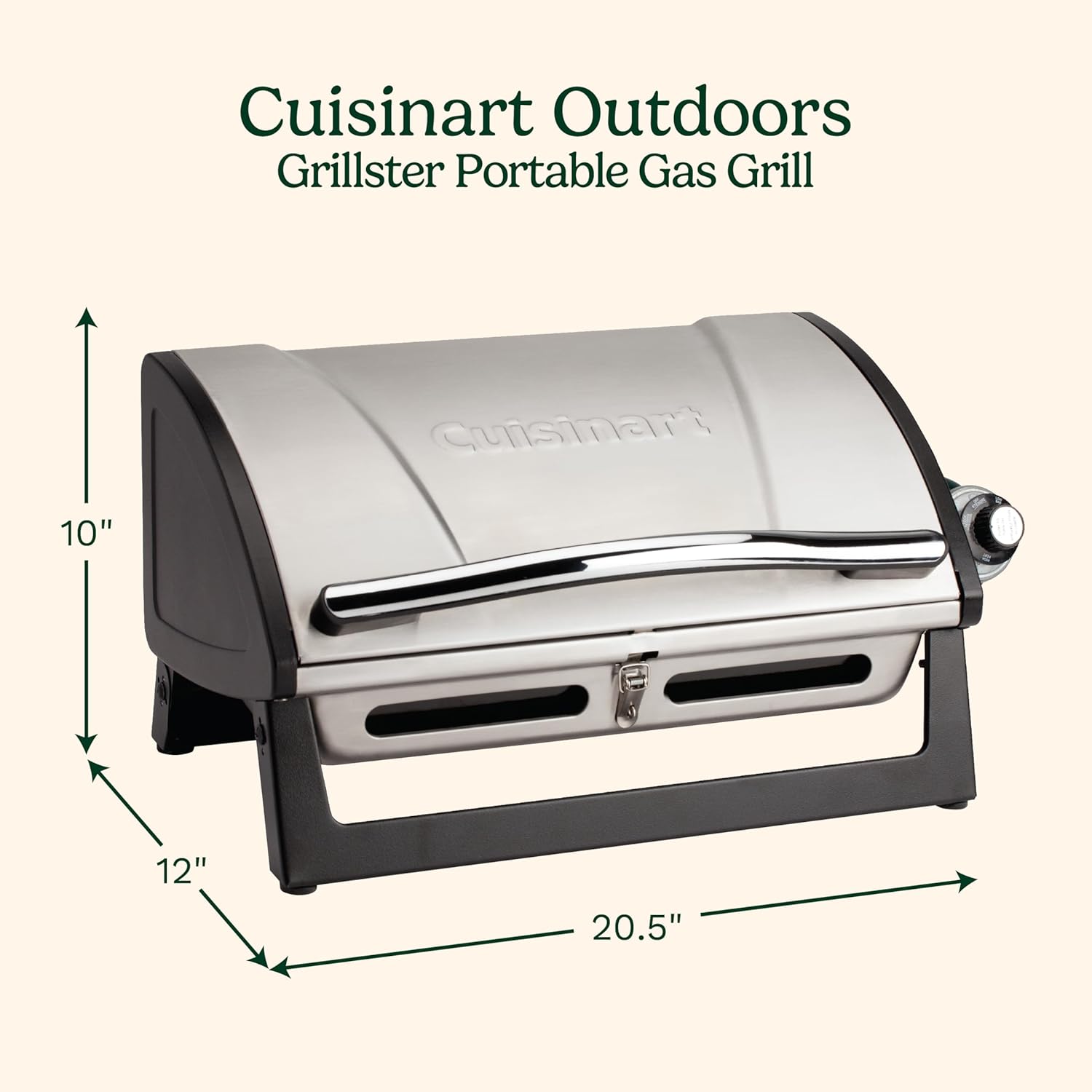
If you’ve ever looked at a portable gas grill’s spec sheet, you’ve seen a big BTU number front and center. BTU — short for British Thermal Unit — is simply a measure of heat energy output per hour. A higher number sounds like a better grill, and manufacturers count on that assumption. But here’s what the marketing doesn’t tell you: a grill with 12,000 BTU spread across a tiny cooking surface can actually produce a more intense, steak-searing heat than a grill rated at 20,000 BTU across a much larger grate. The number that actually predicts sear performance is BTU-per-square-inch — total burner output divided by the primary cooking area in square inches. It takes about thirty seconds to calculate, and it separates the grills that genuinely cook from the ones that merely get warm. This guide walks you through the math, shows you where common portables land, and gives you a clear decision rule for your next purchase.
Why Total BTU Is the Wrong Number to Shop By
The total BTU figure printed on a box or listed on a product page is a raw energy number — it tells you how much gas the burner can consume per hour at full throttle, not how effectively that heat concentrates on your food. Think of it like horsepower in a car: a pickup truck can have more horsepower than a sports car and still be slower because of weight and gearing. Heat density works the same way.
AmazingRibs.com’s deep-dive on grill heat science makes this point plainly: a burner’s output is only meaningful relative to the cooking surface it’s trying to heat. A compact grill with a 12,000 BTU burner and 144 square inches of primary grate space delivers roughly 83 BTU per square inch — well into steak-searing territory. A “premium” portable rated at 20,000 BTU across 360 square inches of grate comes in at about 56 BTU per square inch — enough to cook through, but not enough to produce the aggressive Maillard crust (the browning reaction that creates flavor on the surface of protein) that separates a grilled steak from a pan-cooked one.
Serious Eats’ buyer’s guide on gas grills reinforces this framing directly, noting that the relationship between burner output and cooking surface is the first filter any serious buyer should apply — and that most manufacturers deliberately lead with the larger, more impressive-sounding raw BTU number rather than the density figure that would invite honest comparisons.
The marketing incentive is obvious. “20,000 BTU” sounds more powerful than “56 BTU/sq in.” The first number wins a skimming shopper. The second number wins a cook.
How to Run the Math in Under a Minute
The formula is simple:
BTU/sq in = Total Burner BTU ÷ Primary Cooking Area (sq in)
The only friction is finding the right inputs. Two things to watch:
1. Use primary cooking area only. Many spec sheets list “total cooking area” by adding the main grate and a warming rack. Warming racks run significantly cooler than the primary grate — they’re not searing surfaces. Always strip that number out and use the main grate area alone. If the spec sheet doesn’t separate them, look for the grate dimensions (length × width) and calculate it yourself.
2. Use total burner BTU, not per-burner BTU. Some listings show per-burner output. If a grill has two 8,000 BTU burners, total is 16,000. Simple, but easy to miss when you’re comparing tabs quickly.
Quick reference: where common portables land
| Grill | Total BTU | Primary Area (sq in) | BTU/sq in |
|---|---|---|---|
| Weber Traveler (1-burner) | 13,000 | 228 | 57 |
| Camp Chef Everest 2X (2-burner) | 20,000 | 285 | 70 |
| Napoleon TravelQ Pro 285 | 12,000 | 285 | 42 |
| Generic 2-burner “tabletop” ~$60 | 20,000 | 360 | 56 |
| Coleman RoadTrip 285 | 20,000 | 285 | 70 |
Figures derived from published manufacturer specs as of early 2026. Primary cooking area extracted from grate dimensions where total area figures bundled warming racks.
A few things stand out immediately. That generic $60 tabletop grill with its impressive-sounding 20,000 BTU rating lands at virtually the same heat density as grills costing three to five times more — which tells you the marketing gap is real but the actual thermal performance gap at the grate may be narrower than you’d expect at the low end. The Napoleon TravelQ Pro, meanwhile, produces the lowest heat density in this group despite its premium price point — a fact that reviewers at Wirecutter’s portable grill roundup have flagged in their performance notes, pointing out that the TravelQ’s design strengths lie in its lid seal and heat retention rather than raw burner output.
The Threshold Numbers: What Actually Matters for Searing
Now that you can calculate the number, you need a benchmark. Based on aggregated review patterns across Wirecutter, Serious Eats, and AmazingRibs.com, here’s how the ranges translate to real cooking outcomes:
Below 50 BTU/sq in: You’re in “cooking” territory, not “searing” territory. These grills will cook chicken, fish, and vegetables thoroughly and well — but they’ll struggle to develop a hard sear crust on a thick steak or a burger patty within a reasonable cook time. Owners of grills in this range frequently report needing to cook proteins longer than expected and ending up with more gray-banding (overcooked interior) than they wanted.
50–75 BTU/sq in: The functional sweet spot for most portable gas grills. Consumer Reports’ portable grill buying guidance consistently places grills in this band among the top performers for general outdoor cooking, noting acceptable sear development alongside good heat-up times. Most quality portables in the $200–$400 range live here.
75–100 BTU/sq in: Aggressive sear territory. Grills here can develop a meaningful crust in 60–90 seconds per side on a well-marbled steak. Camp Chef’s two-burner models and some compact single-burner designs achieve these numbers by keeping the cooking surface small relative to burner output. Outside Online’s gear reviews of the Camp Chef Everest line specifically cite its concentrated heat output as a differentiator against similarly priced competitors.
Above 100 BTU/sq in: Diminishing returns and management challenges. At very high heat densities on small portables, you lose the ability to create cooking zones — you can’t move food to a cooler section to finish without flare-up risk. Great for searing enthusiasts who know what they’re doing; less forgiving for less experienced cooks.
What BTU/sq in Doesn’t Tell You (And What Fills the Gap)
Heat density is the best single-number filter, but it doesn’t capture everything. Three factors can significantly change real-world sear performance even between grills with identical BTU/sq in ratings:
Lid seal quality. A poorly fitted lid bleeds heat and makes it nearly impossible to maintain consistent grate temperature in wind. Wirecutter’s testing notes consistently reward grills with tight-fitting lids — especially for portable grills that get used at campsites and tailgates where ambient conditions are unpredictable. The Napoleon TravelQ Pro’s lid engineering, for example, partially compensates for its lower heat density by reducing heat loss during the cook. This is where the premium price earns some of its keep even when the BTU numbers look modest.
Grate material. Cast iron retains heat more effectively than thin stainless steel or chrome-plated steel — meaning a cast-iron grate running at 60 BTU/sq in can produce a better sear than a thin steel grate running at 70 BTU/sq in, because the cast iron doesn’t lose temperature as rapidly when cold protein makes contact with it. AmazingRibs.com’s materials analysis makes this thermal mass argument clearly.
Wind and altitude. At elevations above 5,000 feet, propane combustion efficiency drops measurably — effectively lowering your real-world BTU output relative to sea-level specs. A grill rated at 70 BTU/sq in at sea level may perform more like 60 BTU/sq in at a mountain campsite. This matters most for the van-lifers and backcountry campers who haul a Weber Traveler to high-elevation sites. Budget for extra gas and expect longer preheat times.
The Decision Rule: If X, Then Y
You’ve run the math. Here’s how to translate the number into a buy-or-pass call:
If you’re primarily searing steaks, burgers, or thick fish fillets — prioritize a BTU/sq in rating of 65 or higher and accept a smaller primary cooking surface as the trade-off. Don’t let a large grate size seduce you if the heat density doesn’t back it up.
If you’re cooking for four or more people regularly — you need surface area, which means you may have to accept a mid-range heat density (50–65 BTU/sq in) and compensate with grate material quality (cast iron preferred) and a well-sealed lid.
If you cook at elevation or in wind-exposed conditions — add a 15–20% penalty to your BTU/sq in calculation to model real-world output, and target grills with documented lid-seal quality. A grill that tests at 70 BTU/sq in in lab-condition specs should feel like 58–60 BTU/sq in on a breezy ridge at 7,000 feet.
If you’re evaluating a premium grill ($500–$800+) — BTU/sq in alone won’t explain the price premium. Run the number first to confirm it clears your minimum threshold (50+ BTU/sq in), then evaluate the residual premium against lid engineering, grate quality, parts availability, and build longevity. A grill that scores 58 BTU/sq in but has a cast-iron grate, a gasket-sealed lid, and readily available replacement burners may be a better five-year investment than a 72 BTU/sq in grill with a thin steel grate and no parts ecosystem.
If the spec sheet doesn’t give you the primary grate area separately — treat that as a yellow flag about the brand’s transparency. Call it out, dig for the grate dimensions, and calculate yourself before committing.
The number isn’t magic. But it’s the fastest honest filter available on a spec sheet, and it immediately exposes the grills that are selling marketing rather than heat.