April 18, 2026 • Marlowe Finch • 9 min reading time • Prices verified June 4, 2026
Upgrade the Grate: Cast Iron Replacements That Unlock Better Sears on Portable Grills
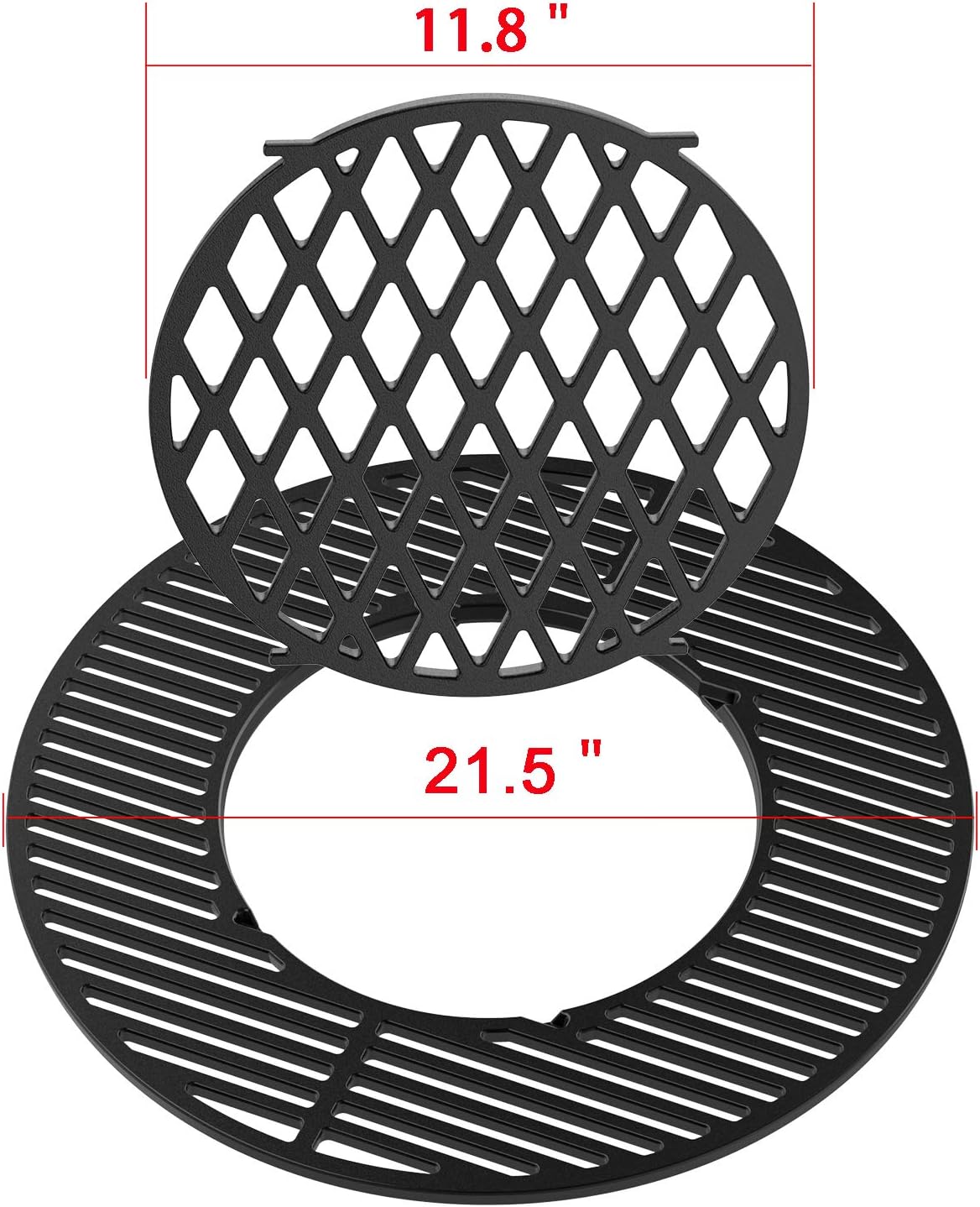
Most portable grills ship with thin chrome-plated or stainless-steel wire grates. Those grates are light, easy to pack, and perfectly adequate for warming hot dogs — but they shed heat the moment cold protein lands on them, which means you get grey, steamed meat instead of the dark, caramelized crust most of us are actually chasing. That crust — the product of a chemical process called the Maillard reaction, where proteins and sugars brown under intense direct heat — is what separates a restaurant-quality sear from a backyard disappointment. Cast iron (a dense, carbon-rich metal alloy that absorbs and holds heat far longer than thin steel wire) is the standard fix. This guide will show you how to size a replacement cast-iron grate for your specific portable, what to look for in the hardware, and how to decide whether the upgrade math actually works for your rig.
Why the Factory Grate Is Holding Your Sear Back
The gap between a $40 chrome-wire grate and a cast-iron replacement is not subtle, and the physics are simple. Heat retention is the key variable. Wire grates have very little thermal mass — the physical bulk that stores heat energy and releases it slowly back into whatever you’re cooking. When a cold, wet steak hits a thin wire, the wire temperature drops fast, the Maillard reaction stalls, and moisture from the meat surface turns to steam before it can evaporate. The result is a boiled exterior, not a seared one.
The team at Amazing Ribs, in their long-running comparison of grate materials, put it plainly: cast iron’s density means it recovers surface temperature faster after contact, which is the single biggest mechanical factor in achieving a consistent, even sear mark. Cook’s Illustrated’s testing panel reached a similar conclusion, noting that heavier grate bars — regardless of whether the underlying heat source was gas, charcoal, or pellet — produced more consistent Maillard browning than lighter alternatives under identical ambient temperatures.
The tradeoff, as you already know if you’ve hauled a portable to a campsite, is weight. Cast iron is roughly three to four times heavier per square inch of grate surface than stainless wire. That tradeoff is real, and it’s worth naming: if you’re backpacking with your grill and every ounce counts, a full cast-iron swap may not be the right call. But if you’re a van-lifer, a tailgate regular, a balcony cook, or a weekend camper loading a vehicle, the weight penalty is often negligible against the performance gain.
Sizing a Replacement Grate: The Measurement That Actually Matters
The single biggest mistake buyers make is ordering by the grill’s nominal cooking area (the number the manufacturer advertises, often inflated by including warming racks or rounded up for marketing purposes) rather than the interior rim dimension — the actual rectangular or circular space your grate needs to drop into.
Before you order anything, do this:
- Remove your existing grate and set it flat.
- Measure width and depth (or diameter for round grills) at the outer edge of the grate itself, not the grill body.
- Subtract 1/4 inch on each axis. That clearance lets the heavier cast-iron piece drop cleanly without binding as the metal expands under heat.
Wirecutter’s portable grill coverage repeatedly flags fit as a consumer pain point with aftermarket cast-iron grates — buyers receive pieces that are technically labeled for their grill model but seat unevenly because of production tolerances. If you’re buying for a named model (Weber Traveler, Camp Chef Everest, Traeger Ranger, Napoleon TravelQ Pro), check the aftermarket vendor’s confirmed-fit list, not just the grill brand’s name.
By the Numbers: What You’re Actually Comparing
| Grate type | Typical weight (200 sq in surface) | Heat recovery time after cold contact | Typical cost |
|---|---|---|---|
| Chrome-plated wire | ~0.8 lb | 45–90 seconds (per manufacturer-published BTU data) | Included / $10–$20 |
| Porcelain-coated steel | ~1.4 lb | 30–60 seconds | $20–$45 |
| Cast iron, bare | ~3.5 lb | 15–30 seconds | $35–$80 |
| Cast iron, pre-seasoned | ~3.5–4 lb | 15–30 seconds | $45–$110 |
Heat recovery estimates extrapolated from published burner BTU ratings and grate thermal mass specs; individual results vary by ambient temperature and wind.
What to Look For When Choosing Cast Iron Grate Hardware
Bar Width and Spacing
Cast-iron grates come in two dominant geometries: narrow-bar (roughly 1/4-inch rods, closer to traditional wire spacing) and wide-bar (3/8-inch to 1/2-inch flat bars, often called “sear grates” or “cooking grates”). For portable applications, the wide-bar geometry is generally the better choice. The larger contact patch between the bar and the protein surface means more direct conduction, faster Maillard, and more defined sear marks. The tradeoff is that wider bars reduce the open space between bars, which can slightly restrict airflow on charcoal portables — something to weigh if you run a compact kettle or hibachi where airflow management is already tight.
Serious Eats, in their breakdown of grill grate science, notes that while dramatic sear marks are partly aesthetic, the total browning area — the sum of all contact points — is what drives flavor development. A wider bar delivers more browning per square inch of protein surface even if the visual crosshatch is less dramatic.
Bare Cast Iron vs. Porcelain-Enameled Cast Iron
This is the decision most intermediate buyers obsess over, and the honest answer is: both work well, but they have different maintenance profiles.
Bare cast iron requires active seasoning — a process of baking thin layers of cooking oil onto the metal until they polymerize into a protective, non-reactive coating. Get that right and bare cast iron develops a near non-stick surface over time, handles very high heat without degradation, and can be restored from rust if neglected. Owners in long-run reviews consistently report that a well-maintained bare cast-iron grate improves with use, the opposite of most grill hardware.
Porcelain-enameled cast iron ships ready to cook, is easier to clean, and resists rust without the seasoning ritual. The porcelain coating does chip under impact or thermal shock (dunking a screaming-hot grate in cold water, for example), and once chipped, the underlying cast iron begins to rust at the exposed point. For a portable grill that gets bumped in transit, porcelain adds both a benefit (corrosion protection on intact surfaces) and a risk (vulnerability at the exact impact points a portable grate is most likely to encounter).
For most portable-grill users who want minimal fuss, porcelain-enameled cast iron is the practical call. For the serious cook who is willing to build a seasoning ritual into their setup and wants maximum longevity from a restorable piece of hardware, bare cast iron is the ceiling.
Universal vs. Model-Specific Grates
Model-specific grates, made or licensed for a named grill (Weber, Camp Chef, Traeger), tend to fit cleanly, account for the specific burner layout of that grill, and come with the brand’s replacement-parts infrastructure behind them. The downside is price: Weber’s official cast-iron grate upgrades for their Traveler line run $60–$90 as of mid-2026, and Traeger’s Ranger cast-iron insert runs in the same range.
Universal cast-iron grates, typically sold in standard rectangular dimensions (10x16, 12x18, etc.) at lower price points, give you more flexibility but require the careful measurement work described above. Lodge’s cast-iron grill toppers — flat cast-iron griddle panels with ridged surfaces — are frequently used by owners of smaller portables as a hybrid solution: you keep the original wire grate in place for structural support and lay the Lodge piece on top as a secondary contact surface. Cook’s Illustrated has cited Lodge’s manufacturing consistency favorably in multiple cast-iron cookware evaluations, and the brand’s grill toppers start around $35–$55, making them one of the lower-cost entry points to cast-iron grate performance.
The Real Cost Math: Is the Upgrade Worth It for Your Setup?
Let’s run the numbers honestly.
If you’re cooking on a grill whose burner output (measured in BTUs — British Thermal Units, a measure of heat energy output per hour) is already marginal for searing — say, a compact single-burner propane portable rated under 8,000 BTU — upgrading the grate will help but won’t fully close the gap. Cast iron retains heat better, but it can only retain what the burner delivers. A serious sear needs the cooking surface to reach and sustain roughly 450°F–550°F. If your burner can’t get the grate there, the material upgrade has a ceiling.
For portable grills in the 10,000–20,000 BTU range (where most of the mid-tier market sits — the Camp Chef Everest’s two burners, for example, are rated at 20,000 BTU combined), a cast-iron grate is a genuine unlock. The burner has the output; the factory grate was the limiting factor. Swapping in cast iron in that range is where owners most consistently report a noticeable step-change in searing performance.
The five-year cost comparison is also worth framing. A replacement cast-iron grate ($45–$110) lasts years if properly maintained — owners in long-run reviews frequently report using the same bare cast-iron grate for five or more seasons with no degradation. The factory chrome-wire grate on most portables begins to pit and lose its chrome plating within one to two seasons of regular use, leading most active grillers to replace it anyway. The cast-iron upgrade often costs less over five years than two rounds of factory-spec replacement grates.
If X, Then Y: The Decision Rules
Here’s where the tradeoffs collapse into clear choices.
If you cook primarily burgers, steaks, or anything you want hard-seared: Cast iron is the upgrade. Start with a porcelain-enameled version for lowest maintenance friction, or go bare if you’re willing to build the seasoning habit.
If your grill is rated under 8,000 BTU: The cast-iron upgrade will improve consistency but won’t give you a full sear. Consider whether a higher-output grill replacement makes more financial sense than a grate swap on an undersized platform.
If portability is your top priority (trail, backpack, bike): Skip it. The weight penalty is real. Stick with the factory grate or a lightweight stainless upgrade.
If you own a mid-tier named portable (Weber Traveler, Camp Chef, Napoleon TravelQ Pro): Buy the model-specific cast-iron upgrade from the manufacturer or a confirmed-fit aftermarket vendor. The fit precision is worth the slight premium over a universal piece.
If you’re on a tight budget and your grill has a simple flat interior: A Lodge cast-iron grill topper laid over the existing grate is the $35–$55 entry point. You get most of the thermal mass benefit without the sizing complexity of a full replacement.
The grate is not a glamorous upgrade. It doesn’t come with a firmware update or a new lid-seal story. But based on the consistent pattern across owner reports, published spec comparisons, and the underlying physics that Amazing Ribs and Serious Eats have both documented in detail — it might be the highest-return single modification you can make to a mid-tier portable grill that’s already delivering the BTUs. Measure twice, order once, season diligently.